

Hosting looks like a line item. A place to park the files, a bill that arrives every month, nothing to think about, right up until a page goes blank and nobody can say why.
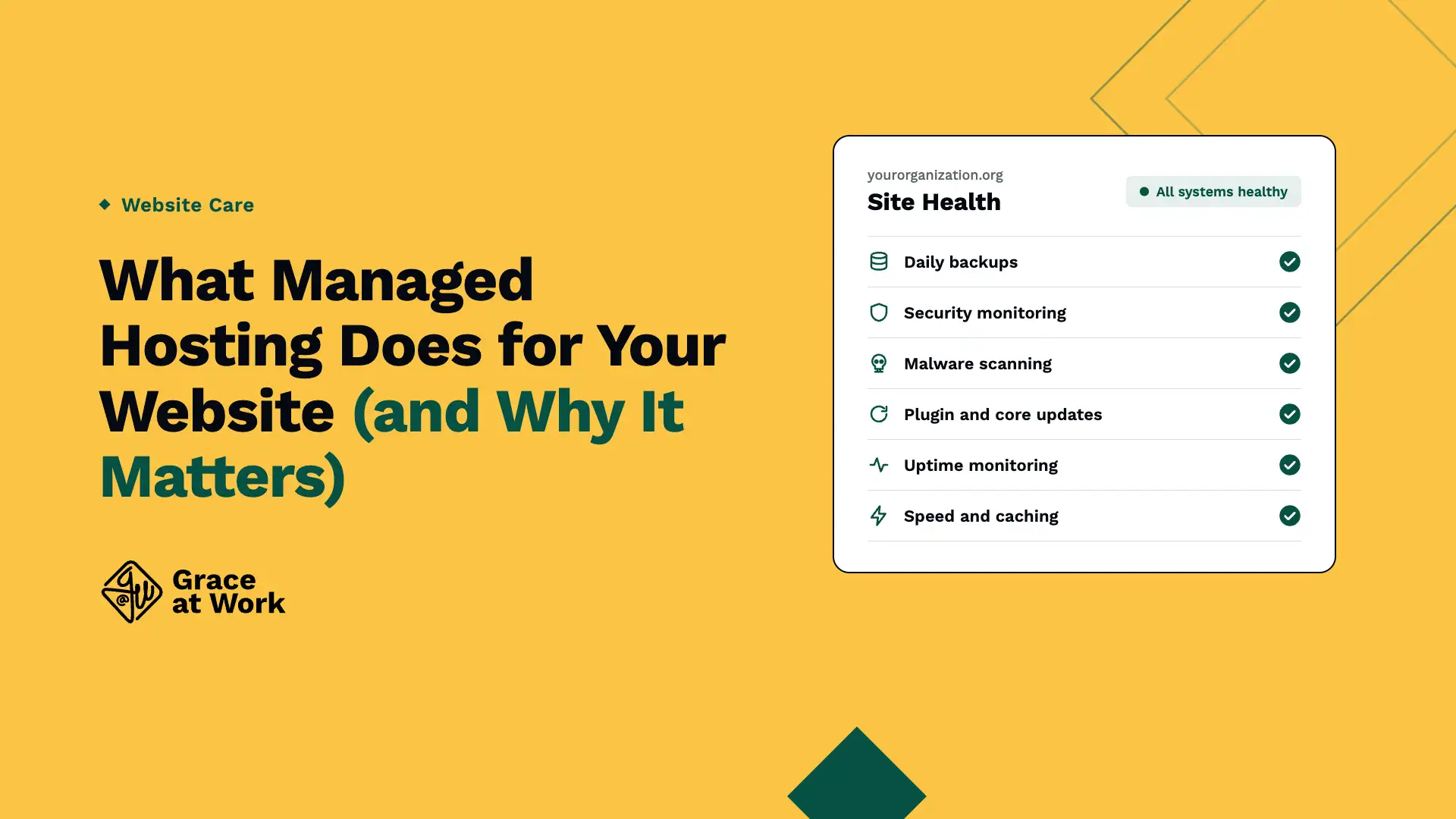
A managed plan is not a bigger parking space. It is a set of jobs someone has to do whether or not you are watching, and most of them are invisible when they are done well. Here are six of them.
01
Updates Arrive Whether You Handle Them or Not
WordPress, your theme, and every plugin behind your site release updates constantly. Each one is a fix, and each one is a small chance that something on a page moves. On a managed plan they are applied with care and then checked, rather than piling up until the cost of ignoring them comes due all at once.
02
A Backup Is Only Worth the Place You Keep It
Your site is backed up daily, in triplicate, kept in different data centers and retained for 90 days. The spread is the part worth caring about: a copy kept on the same server as your website is not much help on the day that server is the problem.
03
Every Site Is Scanned for Malware Daily
Malware scanning runs on every site at least once a day, and anything it finds raises an alert immediately. It does not stop a site from being compromised; what it changes is whether something is found within a day or sits there for months. Clearing it and tracing where it came from are both covered by every managed hosting plan. A site cleaned without its entry point found can just be hit again.
“
Find out who you would call about your website: not who built it, who hosts it. If the answer takes you looking for a login, you already know how the next problem is going to start.
The who-do-I-call test
04
Someone Notices Before Your Visitors Do
Uptime monitoring means a problem gets spotted rather than reported. The difference shows up on a Saturday afternoon, or the week the office is closed: a site nobody is watching stays broken for exactly as long as it takes someone to notice.
05
The Number You Call Already Knows Your Site
When something does go wrong, the slow part is usually the explaining. Managed hosting gives you one point of contact, not a support queue, and the person on the other end does not need your website described to them first.
06
The Paid Parts of Your Site Are Covered Too
A WordPress site usually leans on a few paid plugins: the form on your contact page, the tool that keeps your photos from slowing it down. Those licenses are part of a managed plan and stay current, instead of being one more annual renewal nobody remembers until it lapses.
Most of what managed hosting does, you will never see, which is the point.
Not sure what yours is doing?
We can take a look with you.